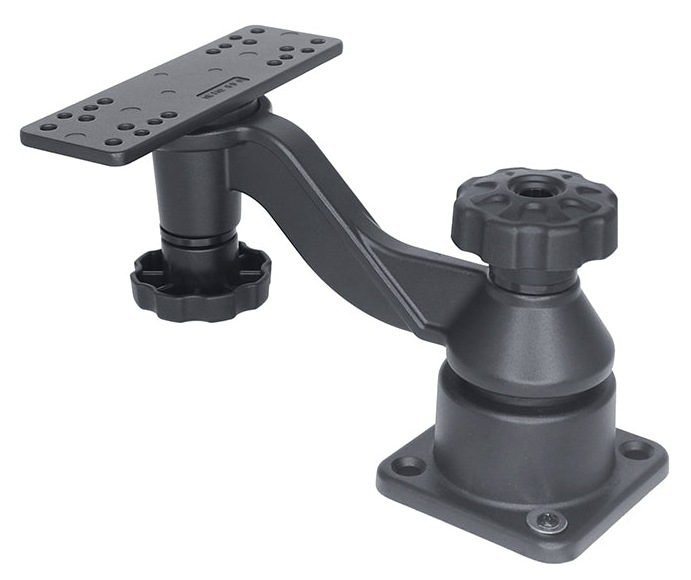
Fish Finder Mounts
Compare swing-arm, pillar and dual display configurations for fishing boat decks and consoles.
View configurations for Fish Finder MountsInstallation guide
Choose a rail or track interface that fits the boat and puts the electronics where anglers can see them and move around them.
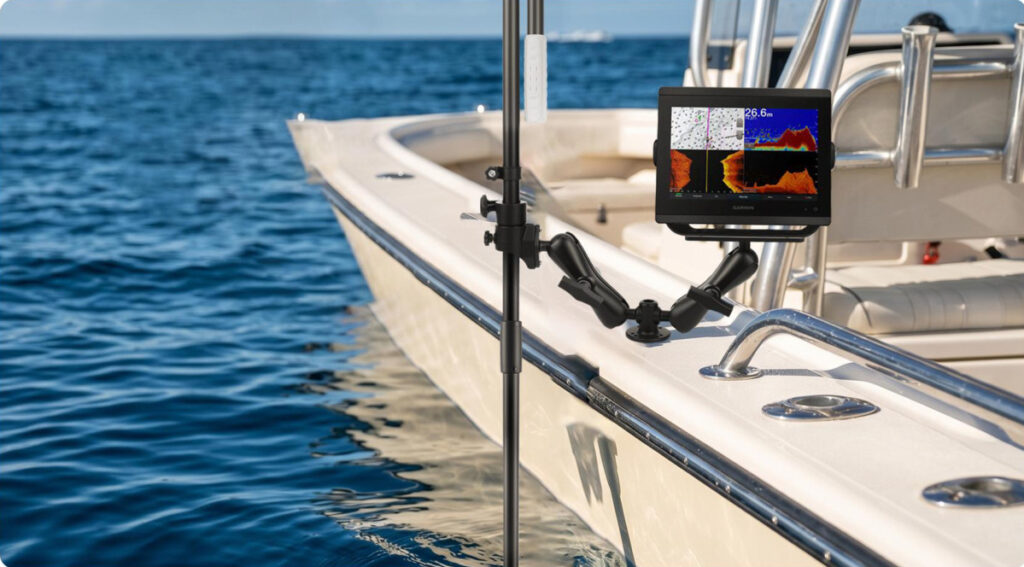
Identify the actual mounting surface first. A round rail, an accessory track, and a flat gunwale each use different attachment geometry. Photograph the cross-section or share its drawing, mark where the screen or arm should sit, and indicate any nearby cleats, rod holders, covers, or access points.
Record the rail diameter or track profile, including slot and opening dimensions. For a flat gunwale, show the usable surface width and thickness.
Mark track end stops, adjacent fittings, and how far the arm needs to slide or rotate without interfering with the boat or crew.
Supply the equipment weight and how far it will sit out from the attachment. Review the leverage at the rail, track, and fasteners with the boat builder’s limits.
Check how hardware enters the track or tightens around the rail, the access needed to adjust it, and whether the assembly must come off for trailering or a cover.
Review when a confirmed rail diameter and a short reach can put the display in view without blocking side access.
Review when the boat has an accessory track and the equipment needs to be moved, lifted off, or shared between mounting points.
Review when a dedicated attachment area can provide the stable footprint needed for a larger display or a longer arm.
Track openings, internal profiles, and hardware dimensions can vary. Send the track drawing or a measured cross-section and matching hardware information so the proposed base can be checked against it.
Send the rail or gunwale profile and its usable clamping area, plus the equipment weight, arm reach, and nearby obstructions. The design can then account for how the clamp seats and how the equipment will be used.
Compare swing-arm, pillar and dual display configurations for fishing boat decks and consoles.
View configurations for Fish Finder Mounts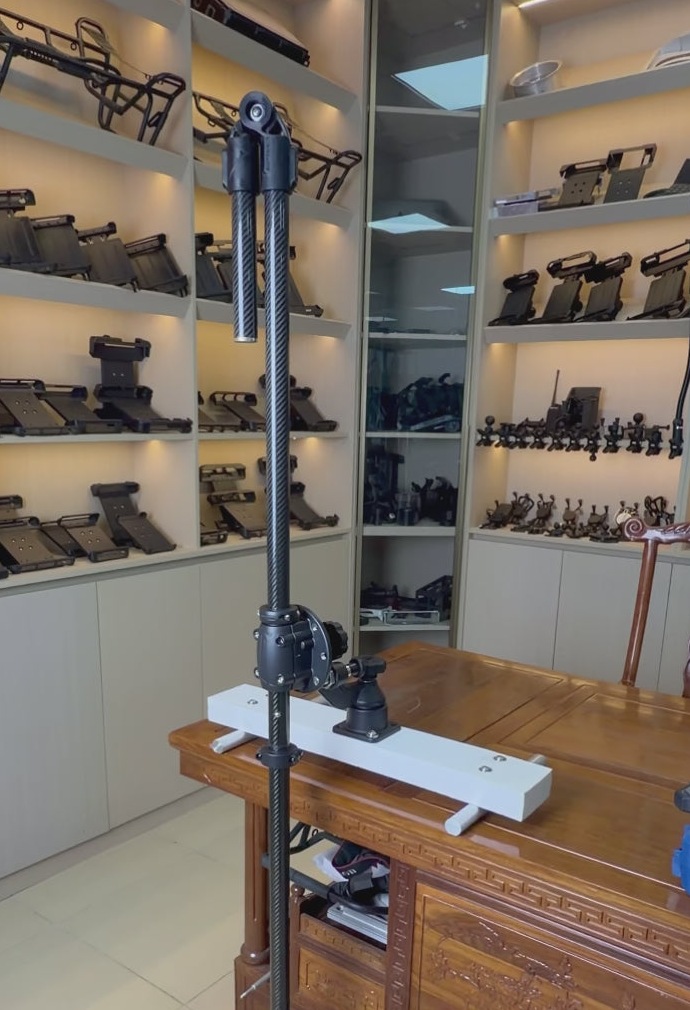
Before choosing a transducer pole mount, measure from the mounting point to the waterline and check clearance for deploying and stowing the pole. Match the adapter to your exact transducer.
View configurations for Live Sonar & Transducer Poles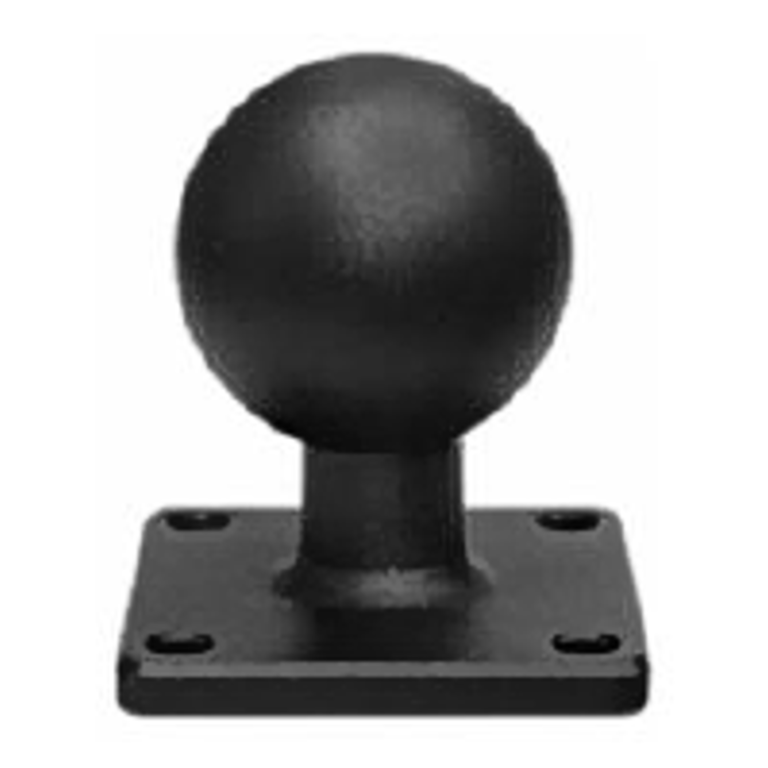
Identify the individual base, socket arm and device plate before specifying a complete assembly.
View configurations for Mounting ComponentsShare your equipment, mounting surface and planned volume.