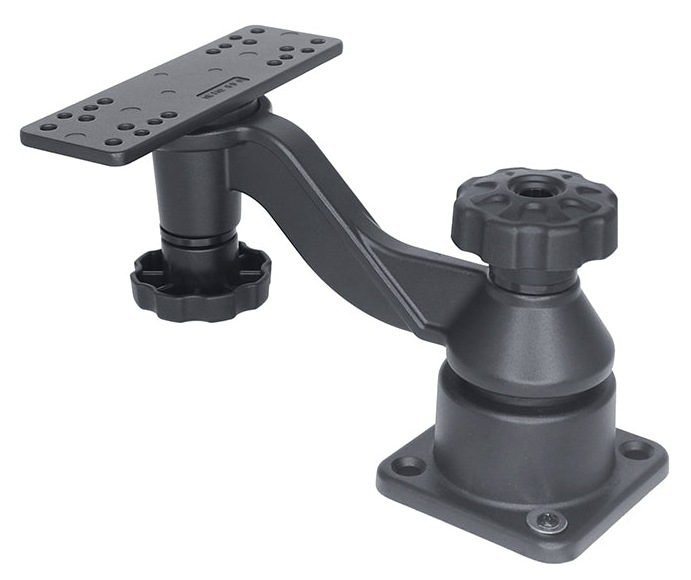
Fish Finder Mounts
Compare single- and dual-display fish finder mounts in swing-arm, pillar and plate configurations. Check the bolt pattern, mounting surface and room to move your screen.
View configurations for Fish Finder MountsInstallation guide
Place a fish finder or chartplotter where you can read it from the helm. Compare fixed, swing-arm and dual-screen console graph mounts by dash footprint, connector depth and access to gauges and controls.
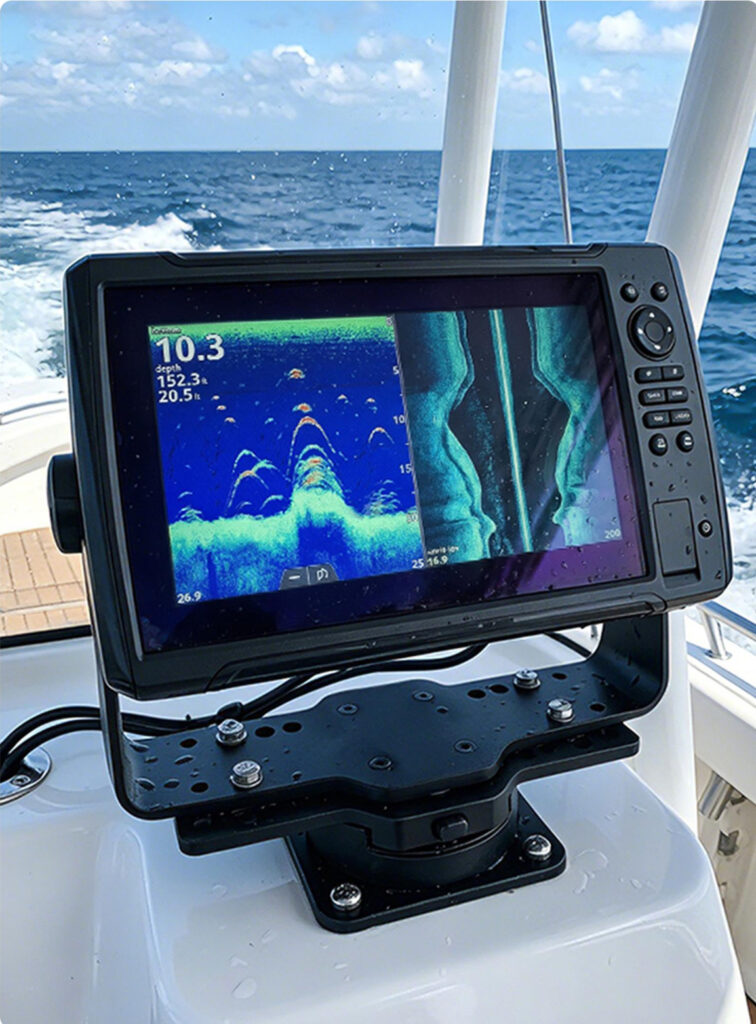
Draw the dash outline and mark the steering wheel, throttle, windscreen, storage door, wiring exit, and key views from the operator’s seat. Include side and rear measurements. They show whether the bracket can clear the dash and leave enough space for the connectors.
Review visibility from the normal seated and standing positions, including views through the windscreen and to existing gauges.
Check hand and lever clearance through the full movement of the steering wheel, throttle, switches, and any hinged panels.
Document the panel shape and thickness, openings behind it, and where fasteners and backing can be accessed for assembly.
Measure the rear connector space and cable path. Allow room to release the connectors and lift the electronics out for service.
Review when there is a stable attachment area and a predictable viewing position for the display.
Review when the screen needs to swing toward a passenger, angle for glare, or move to make space for dash service.
Review when separate navigation and sonar displays need to share the helm. Establish which display should be closest to the operator’s natural line of sight.
Mock up both screen outlines and move the wheel and throttle through their full range. Check if you can unplug one screen without removing the other. Compare adjustable single-screen mounts or browse dual-screen mounts.
Leave space to reach both sets of plugs from the driver’s position or through a service panel. See the bass boat bow and console comparison for wiring and visibility checks.
Send the dash drawing, device and cradle hole patterns, panel thickness, access behind the dash, and the preferred viewing angle. Include the expected production quantity and any target assembly steps.
Share the original opening and fastener dimensions and the area available underneath. A bracket or adapter plate can be reviewed against the existing pattern, screen footprint, and remaining panel structure.
Compare single- and dual-display fish finder mounts in swing-arm, pillar and plate configurations. Check the bolt pattern, mounting surface and room to move your screen.
View configurations for Fish Finder Mounts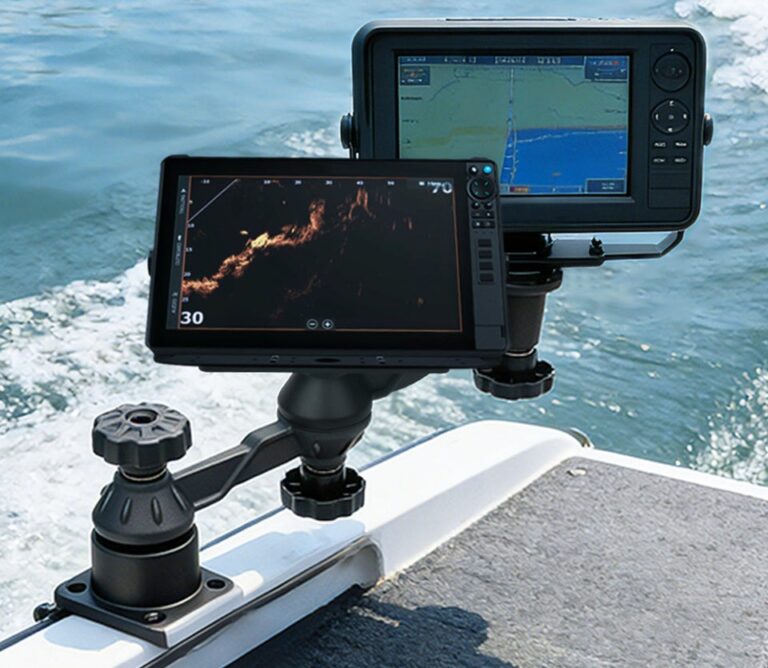
Compare dual graph mounts for side-by-side, inline or stacked displays. Check each display's mounting holes and available space at the bow or console.
View configurations for Dual Fish Finder Mounts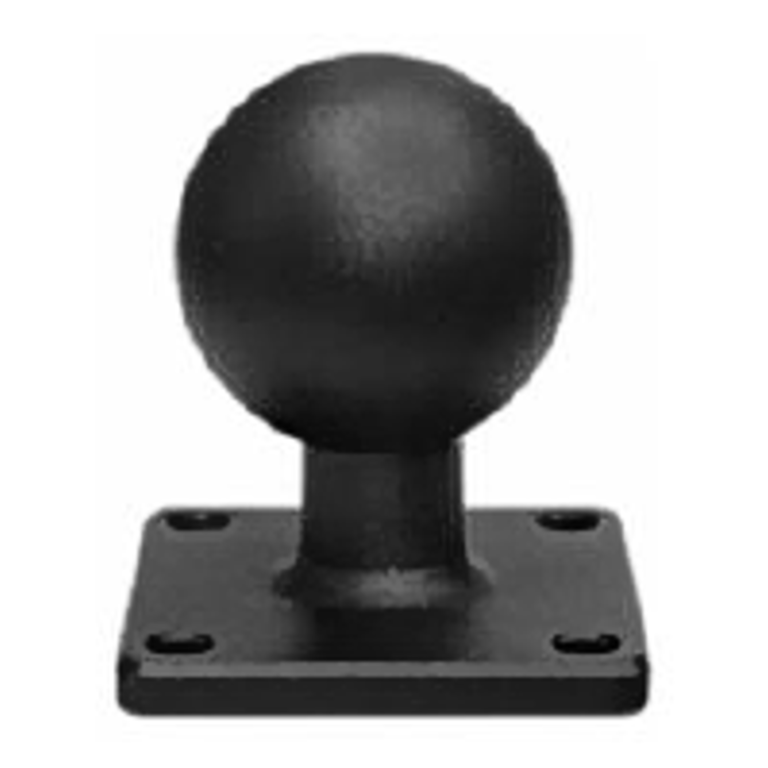
Build your mounting setup from a ball base, double socket arm and device plate. Start with the ball diameter, then check arm length, hole spacing and fastener access.
View configurations for Mounting ComponentsShare your equipment, mounting surface and planned volume.